TL;DR: A well-maintained hot rubber melter lasts for decades. The most important habits are consistent cleaning after every use, regular inspection of burner components and agitation systems, proper seasonal storage, and prompt attention to any performance changes. Air-jacketed, oil-less melters like A&A Melters’ product line have a significant maintenance advantage over oil-jacketed alternatives: there is no heat-transfer oil to monitor, replace, or dispose of, which removes an entire maintenance category from your schedule.
A hot rubber melter is a capital equipment purchase that should serve your crew for ten, fifteen, or twenty years or more. How long it actually lasts depends less on brand than on how consistently it gets looked after between pours.
These maintenance habits apply across the A&A Melters line, from the compact HotPot to the A-500. Most require nothing more than a few minutes after every shift.
Why does regular maintenance matter so much for hot rubber melters?
Hot rubber melters operate at high temperatures with abrasive and adhesive material flowing through them every day. Without regular maintenance, material builds up on heat-transfer surfaces, reducing efficiency and eventually causing overheating. Burner components clog. Agitation systems develop wear. Seals and gaskets degrade.
The cost of deferred maintenance is always higher than the cost of the maintenance itself, both in parts and in downtime at the worst possible moment on a job site.
A&A’s air-jacketed design reduces one of the most common maintenance headaches in competing equipment: there is no oil bath to manage. But the kettle, burner system, agitation components, and fuel lines still benefit from a consistent schedule.
What should you do after every use?
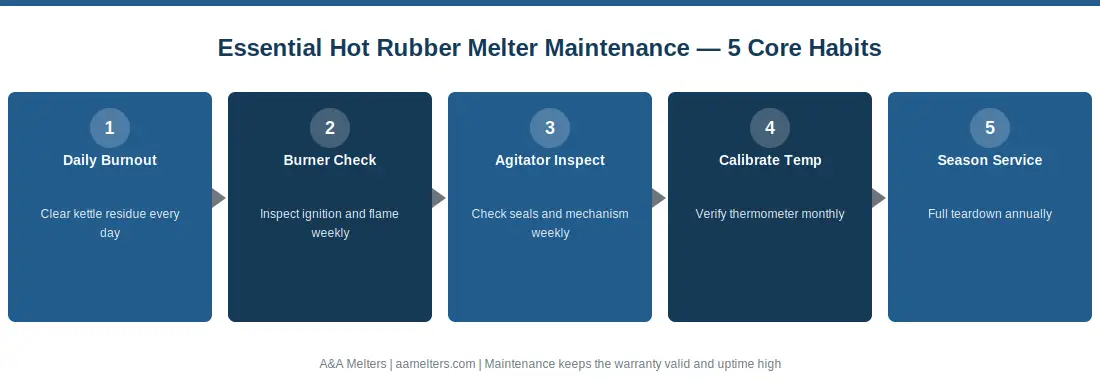
Drain and clean the kettle while hot. This is the single most important maintenance habit. Hot rubber becomes extremely difficult to remove once it cools and hardens. After every pour:
- Pour out as much material as possible while the kettle is still at working temperature.
- Leave a thin protective heel of material in the kettle, which coats and protects the interior surface.
- Wipe down the exterior and any spillage on the frame or burner area while still warm.
Check the agitation system. While the kettle is still warm and the material is fluid, turn the agitator through a full range of motion. Any binding, stiffness, or unusual resistance should be investigated before the next use. Material buildup on agitation paddles reduces mixing efficiency and can cause damage over time.
Inspect the exterior and fuel connections. Look for cracks, welds under stress, and any loose fuel fittings. A few seconds of visual inspection after every shift catches most problems before they become failures.
What weekly and monthly checks should you run?
Burner system inspection. Check the burner orifices for carbon buildup or blockage every week of heavy use. A dirty orifice produces uneven combustion and slows heat-up times. Clean with compressed air and, if needed, a small brush rated for the burner type. Never use metal picks that can enlarge the orifice.
Fuel lines and connections. Inspect hoses for cracking, abrasion, and tight connections. Replace any hose showing surface cracking immediately, this is a safety matter, not just a maintenance one.
Temperature control calibration. Verify that your temperature gauge is reading correctly against a secondary thermocouple or infrared thermometer monthly. A drifting temperature gauge causes both material quality issues (too hot or too cool) and unnecessary fuel consumption.
Agitation bearings and seals. Grease agitation shaft bearings on the schedule in your model’s manual. Dry bearings are a common and easily avoidable failure point.
How do you prepare a hot rubber melter for seasonal storage?
If your melter sits unused for weeks or months (winter storage for northern contractors, or extended off-season periods), proper preparation prevents the most common storage-related failures:
- Drain the kettle completely. Do not store the melter with material inside. Hardened rubber in a cold kettle is extremely difficult to remove cleanly and can damage surfaces during re-heating.
- Clean burner orifices and combustion chamber. Carbon and residue left in the burner system absorbs moisture during storage and can corrode components.
- Disconnect and store fuel lines properly. Drain propane connections completely and cap the line ends. Store hoses coiled loosely, away from heat sources or UV exposure.
- Cover the kettle opening. Prevent moisture, debris, and pests from entering the kettle interior during storage.
- Lightly oil exposed metal surfaces (frame, unpainted steel) with a rust-preventive coating if the storage location is humid.
When returning the melter to service after storage, inspect all fuel connections, test the burner at low flame before full operation, and bring the kettle up to temperature slowly with the first batch.
Does an air-jacketed melter require less maintenance than oil-jacketed equipment?
Yes, in a meaningful way. Oil-jacketed melters require the heat-transfer oil to be:
- Checked and topped up before each use.
- Monitored for thermal degradation and contamination over time.
- Changed on a scheduled interval (typically annually, or more frequently under heavy use).
- Disposed of as a used oil byproduct.
An air-jacketed, oil-less melter like A&A’s product line has none of those requirements. The air jacket is sealed and self-maintaining. This removes an entire category of scheduled maintenance and eliminates the recurring cost of heat-transfer oil supplies.
The net result is a shorter, simpler maintenance routine and a lower total maintenance cost over the life of the equipment.
What should you do if the melter is underperforming?
Common performance issues and their first-line checks:
| Symptom | First check |
|---|---|
| Slow heat-up | Burner orifice blockage; fuel pressure; material level too high for startup |
| Material charring | Temperature too high; agitator not running; material left too long without movement |
| Agitator stalling | Material level; bearing wear; drive component damage |
| Uneven temperature | Thermocouple placement; buildup on heat surfaces; burner calibration |
| Fuel consumption increase | Burner orifice condition; insulation integrity; temperature overshoot |
For issues beyond first-line field checks, contact A&A Melters directly. As a family-run manufacturer, A&A carries parts for every unit in its current line and can help diagnose problems by model. Call 1-888-469-4480 or email the service team.
Frequently asked questions
How often should I fully clean a hot rubber melter kettle? A thorough interior clean should happen at least once per season: before putting the unit into service in spring and before winter storage. A quick post-pour drain and wipe should happen after every use.
Can I leave hot rubber in the kettle overnight? Leaving a small protective heel of material is fine. Leaving a full or near-full kettle overnight with the burner off is not recommended: the material will harden and require a long re-heat that stresses the equipment and wastes fuel. For planned overnight stops, drain to a protective heel.
How do I remove hardened rubber from the kettle interior? Re-heat the kettle slowly with fresh material or heat alone (without the agitator, initially) until the hardened material softens, then drain and clean. Never use sharp tools to chip hardened rubber off the interior surface, as this can damage the heat-transfer surfaces.
How long should a well-maintained A&A melter last? A&A’s air-jacketed designs have been proven in the field since the late 1980s. Units maintained on the schedule outlined here routinely last 15 to 20 years or more. With over 1,000 units in operation across North America, field longevity is well documented.
Maintenance is the cheapest insurance you have
The melter that gets cleaned after every pour, checked every week, and properly stored over winter is the one that starts cold on a Monday morning without drama. The time invested in maintenance is a fraction of the cost of an emergency repair or an equipment replacement mid-season.
A&A Melters builds equipment designed to be maintained: accessible components, field-replaceable parts, and a manufacturing team that answers the phone when something needs attention.
For parts, service questions, or model-specific maintenance guides: contact A&A Melters or call toll-free at 1-888-469-4480.