TL;DR: Hot rubber melters operate at temperatures between 350°F and 400°F (177°C to 204°C) with open flame or electric heating elements and highly adhesive material. The injuries that occur on melter job sites are almost always preventable. The precautions below are non-negotiable for any crew operating a hot rubber melter: proper PPE, correct setup and clearances, a charged fire extinguisher on site, safe fuel handling, temperature monitoring, and knowing what to do when something goes wrong.
Hot rubber work is inherently hazardous. The material is extremely hot, highly adhesive, and can cause severe burns on skin contact. The burner system involves open flame or high-temperature electrical elements. And the job-site context adds physical hazards on top of the equipment-specific ones.
Safety on a hot rubber melter site is not about following a checklist once. It is about a crew that has internalized the hazards and operates consistently within safe practices every single day.
What personal protective equipment is required for hot rubber melter work?
Required PPE for operators and crew within the splash zone:
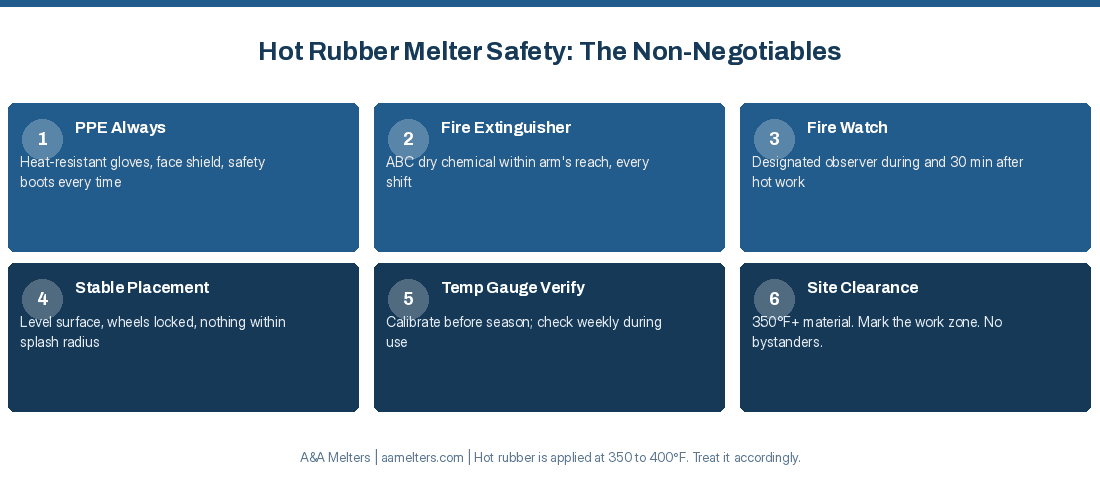
- Heat-resistant gloves: rated for direct contact with material at operating temperatures (350°F–400°F). Standard work gloves are not sufficient.
- Eye protection: safety glasses or a face shield rated for high-temperature splash.
- Long sleeves and long pants: heavy-duty, non-synthetic material. Synthetics melt.
- Steel-toed boots and a hard hat where overhead work or material loading is happening.
Recommended additional PPE for primary operators: full face shield for pours in close quarters; flame-resistant (FR) work wear for operators within the flame envelope of a propane or diesel burner system.
How should you set up the melter correctly for safe operation?
- Level, stable surface. The melter must sit on a firm, level surface. An uneven surface increases spill risk.
- A charged fire extinguisher on site. Keep a dry chemical (ABC-rated) extinguisher within arm’s reach of the operating melter on every shift, and make sure the operator on the unit knows how to use it.
- Clearances from combustibles. Maintain a minimum of 3 feet (1 meter) of clearance from combustible materials in all directions.
- Clear egress routes. The operator and nearby crew must have a clear, unobstructed path away from the melter in all directions.
- Wind awareness. Position the melter so the prevailing wind carries burner flame and hot gases away from the operator and from combustible materials.
- Fuel cylinder placement. Propane cylinders must be upright, secured against tipping, and positioned upwind of the burner. Keep cylinders at least 15 feet from the melter body.
What temperature controls and monitoring are required?
- Never exceed the material manufacturer’s maximum temperature. Most hot-applied rubberized asphalt products specify a maximum of 350–400°F (177–204°C). Always work to the temperature on the product data sheet for the material in the kettle.
- Monitor temperature continuously. Verify the melter’s gauge against a secondary thermocouple or infrared thermometer periodically.
- Do not leave the melter unattended at operating temperature.
What are the specific risks of propane, diesel, and electric fuel systems?
Propane: Inspect hoses for cracking or wear at the start of every shift. Test connections with soapy water (not flame) if a leak is suspected. Keep cylinders away from heat sources.
Diesel: Inspect the fuel line, filter, and nozzle at regular intervals. A clogged nozzle causes incomplete combustion and can lead to flashback.
Electric: Inspect the power cord and connection for damage before every use. Ensure the site circuit is rated for the melter’s draw. Do not operate in standing water.
What is the emergency response procedure for a hot rubber spill or fire?
Material spill on skin: Do NOT attempt to remove it by pulling. Immediately cool with cold water, then seek medical attention.
Kettle fire or flare-up: Shut down the burner immediately. Do not use water on burning rubber (causes violent spattering). Use a dry chemical or CO2 extinguisher. Evacuate non-essential crew.
Fuel leak: Shut off the fuel supply at the cylinder or tank. Extinguish all ignition sources. Ventilate enclosed spaces.
Always have a fire extinguisher within arm’s reach of the operating melter.
What are the specific safety considerations for rooftop work?
- Fall protection: comply with local fall protection regulations for any rooftop edge work.
- Hoisting: use rated lifting points only. Never lift by the fuel lines, the agitator, or the drain assembly.
- Wind: rooftop wind conditions can affect burner performance. Position the melter with wind in mind.
Frequently asked questions
Do operators need specific certifications to run a hot rubber melter? Requirements vary by jurisdiction and project specification. Many commercial and public projects require operators to complete a manufacturer or industry-standard training. Check your local occupational health and safety requirements.
What is the correct fire extinguisher type for a propane-fueled melter? Use a dry chemical (ABC-rated) extinguisher. Never use water on a hot rubber fire.
Is hot rubber melter work covered by specific OSHA or WorkSafeBC regulations? Hot rubber work falls under general industrial heat-hazard and flammable-fuel regulations. In Canada, provincial occupational health and safety regulations apply. In the US, OSHA standards for hot work and heat hazards apply.
Can A&A Melters provide safety documentation for their equipment? Yes. Contact A&A Melters at 1-888-469-4480 or by email for model-specific safety documentation.
Safety is not optional on hot rubber job sites
The crew that follows these precautions consistently works safely through a full career on hot rubber. The hazards are real, but they are manageable with the right habits, the right PPE, and the right setup. A&A Melters builds equipment designed with operator safety in mind, and stands behind it with documentation and service support for every unit in the field.
For safety documentation, parts, or service: contact A&A Melters or call 1-888-469-4480.